Understanding John Deere Tractor Serial Numbers: A Guide to Sustainable Farming
That seemingly random string of letters and numbers on your John Deere tractor's serial plate is actually a wealth of information crucial for efficient operation and sustainable farming practices. This guide provides a step-by-step approach to deciphering your tractor's serial number, revealing its age, origin, and model specifications. This knowledge helps you optimize maintenance, source parts effectively, and reduce your environmental impact. For troubleshooting fuel pump issues, check out this helpful resource: John Deere Fuel Pump.
Decoding Your John Deere Tractor Serial Number: A Step-by-Step Guide
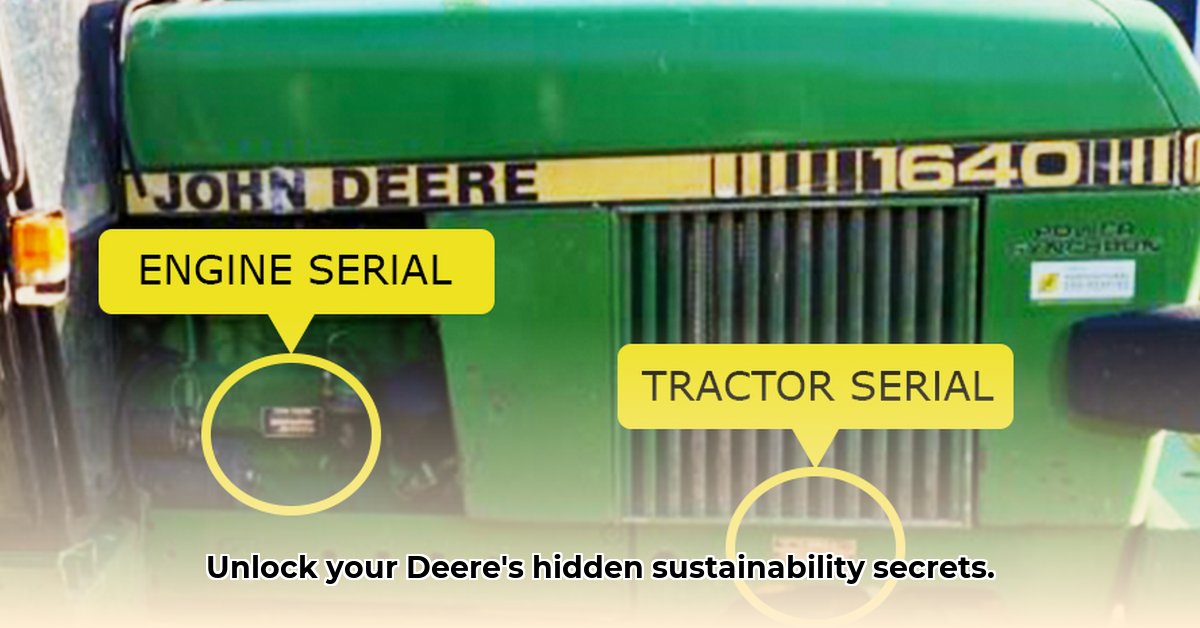
First, locate your tractor's serial number. It's typically found stamped on a metal plate affixed to the tractor chassis, often near the operator's station or on the engine block. Consult your owner's manual if needed. Once located, let's decode it.
Step 1: Assessing Serial Number Length. The length of your serial number provides a clue about the age of your tractor. Shorter numbers (e.g., 5-6 digits) generally indicate older models, while longer sequences (e.g., 13-17 digits or more) signify newer tractors. This variance reflects John Deere's evolving manufacturing and record-keeping systems. Why does this matter? Knowing the age impacts your approach to maintenance and parts sourcing.
Step 2: Identifying Key Components in the Serial Number. A John Deere tractor serial number is structured into segments, each conveying specific information. While the exact format might vary slightly depending on the model year, common components include:
Plant Code: The initial letter(s) often indicate the manufacturing plant. For instance, “M” frequently represents Waterloo, Iowa. A comprehensive list of plant codes can be found on the official John Deere website 1. Knowing the plant of origin aids in parts sourcing and potentially repair services.
Year Code: A group of numbers within the serial number typically identifies the year of manufacture. This is vital for evaluating fuel efficiency, emissions, and necessary maintenance procedures. How does this benefit you? Older tractors may require more frequent servicing to meet current emission standards.
Model Code: This section specifies the tractor's exact model and any sub-model variations. Precise model identification is critical for ordering the correct parts and for ensuring compatibility with components and attachments. Why is this important? Correct parts prevent costly mistakes and downtime.
Unique Serial Number: The final digits form a unique identifier specific to your tractor. This is indispensable for warranty claims, parts ordering, and service record-keeping. Why is a unique identifier essential? It ensures accurate tracking of your tractor's history and maintenance.
Step 3: Utilizing Online Resources for Deciphering. John Deere maintains comprehensive online resources, including databases that allow you to input your serial number for detailed specifications: model specifics, production date verification, and component details 1. Always confirm information from unofficial sources using the official John Deere resources. This is the benchmark for accuracy.
Interpreting Decoded Information: Enhancing Sustainability
The decoded information from your tractor’s serial number empowers you to make informed decisions related to maintenance, parts sourcing, and environmental stewardship.
Optimized Maintenance Scheduling: Knowing the age of your tractor allows you to develop a proactive maintenance schedule, minimizing downtime and preventing costly repairs. This predictive approach reduces long-term expenses and maximizes the lifespan of your equipment.
Precise Parts Sourcing: Identifying the exact model and sub-model ensures you order the correct replacement parts, avoiding compatibility issues and delays. This reduces downtime, repair costs, and improves operational efficiency.
Environmental Impact Assessment: Older tractors may have less efficient engines and higher emissions than newer models. Understanding this allows for informed decisions about potential upgrades or responsible disposal/recycling to reduce your overall environmental impact.
Actionable Insights for Stakeholders
The benefits of deciphering John Deere tractor serial numbers extend beyond individual farmers.
Farmers: Improved maintenance scheduling, reduced downtime, accurate parts ordering leading to cost savings and an enhanced understanding of your tractor's environmental footprint.
Dealers: Effective inventory management, improved customer service, and valuable data for market analysis and parts supply chain optimization.
Recyclers: Accurate assessment of used tractors for responsible component reclamation and efficient recycling procedures.
Environmental Agencies: Data for developing environmentally sound regulations and policies, and insights into the life cycle of agricultural equipment to support sustainable practices.
Conclusion: A Sustainable Future Through Data-Driven Decisions
Decoding your John Deere tractor's serial number unlocks a wealth of information pivotal to sustainable agricultural practices. This knowledge enables informed decision-making regarding maintenance, parts procurement, and environmental considerations. By embracing this data-driven approach, farmers, dealers, recyclers, and policymakers can foster a more efficient and environmentally responsible future for agriculture.